A nuclear facility can leave people working near radiation, unstable structures, or contaminated equipment. Robots move some of that work into a controlled distance, using cameras, radiation sensors, robotic arms, and remote links.
The case for these machines grows as operators handle inspection, maintenance, emergencies, and site cleanup. The hard part is making a robot that keeps working when communication, visibility, access, or power becomes difficult.
Quick read
- Remote machines keep people farther from radiation and damaged equipment.
- Inspection robots can collect video, radiation readings, and site images before a person enters.
- Each machine still needs a recovery plan when its battery, link, drive system, or gripper fails.
Where nuclear robots do useful work
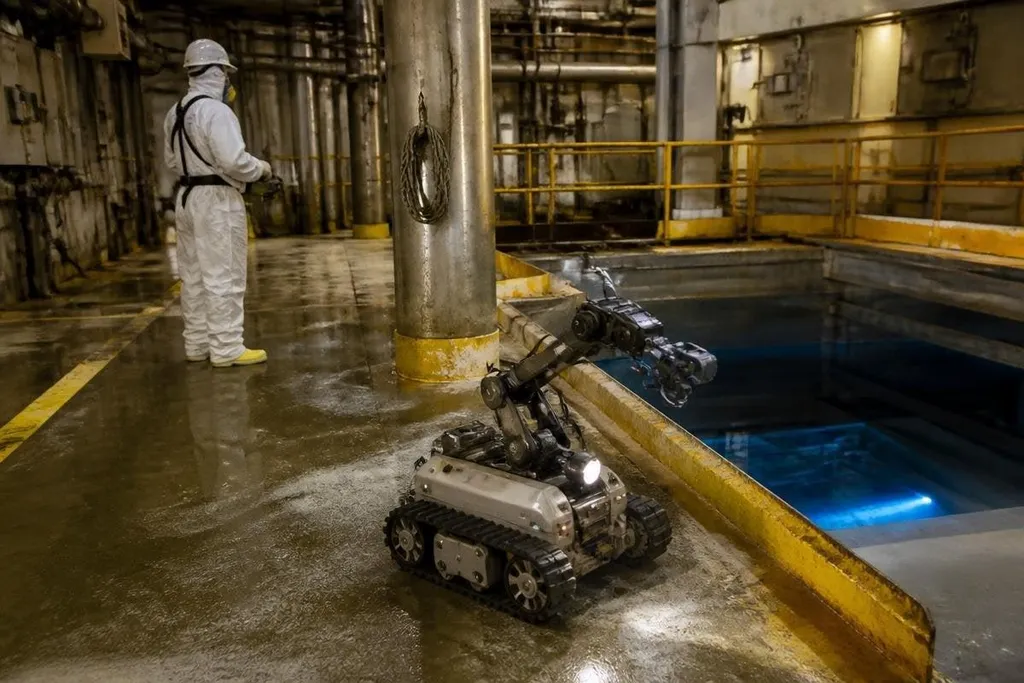
Inspection is often the first job. A tracked robot can carry cameras through a room, while a small crawler can check pipes, tanks, walls, or narrow passages. Radiation sensors add a second layer of information, showing where conditions may change across a work area.
That data helps people decide what to do next. A team can review images and readings before sending a worker inside, choose protective equipment, or plan a shorter task. The robot does not remove the hazard. It helps people meet it with better information.
Remote handling is another clear use. A robotic arm can hold a tool, move a container, or work on equipment while an operator sits behind shielding. The operator still makes the decisions, but their hands and body stay away from the work area.
Why ordinary robots struggle there
Nuclear sites are hard places for machines. Thick walls can weaken radio signals. Dust, darkness, tight spaces, heat, water, and loose material can reduce camera quality or block movement. Radiation can also damage electronic parts, sensors, cables, and batteries over time.
Machines used for this work need more than a camera and wheels. Designers have to protect electronics, manage heat, keep cables from catching, and let operators recover the machine if it stops. A manipulator with limited reach may fail when the target sits behind a pipe or below a narrow opening.
The control system matters as much as the hardware. Operators need clear video, a stable link, and controls that match the robot's movement. Delay in the connection can make delicate work slow and can turn a small mistake into damaged equipment.
Robots support people; they don't replace judgment
Nuclear work has strict procedures because a machine can fail in ways that are hard to see. The machine may lose traction, drop a tool, misread a surface, or stop in a place that blocks access. Teams need a plan for retrieval, manual backup, safe shutdown, and inspection after the mission.
That is why test records matter more than a polished demonstration. A useful system shows how it handles a weak signal, a blocked path, a low battery, and a failed sensor. Operators also need training that covers the robot's limits, not only its normal controls.
For nuclear work, a robot claim should name the site, radiation level, task, test date, and measured result. Reports at Robot24 can put those details beside the machine and its control method, giving a plant manager facts to check before the buying questions begin.
What to check before buying or deploying one
A plant team can use this short checklist when comparing a robot for nuclear work:
- Map the site: record door widths, floor surfaces, slopes, stairs, water, debris, and likely signal blocks.
- Name the task: define the tool, sensor, reach, load, and time the robot must handle.
- Check radiation limits: ask which parts can take the expected exposure and how performance changes over time.
- Plan recovery: decide how staff will retrieve, isolate, repair, or replace the robot after a failure.
- Test the link: measure control delay and video quality from the real operating position.
- Keep a human fallback: set the point where work stops and a trained team takes over.
The right choice depends on the task. A small inspection crawler may fit a narrow passage, while a manipulator behind shielding may suit tool work. One machine rarely covers every room, surface, sensor, and recovery problem.
I'd put recovery planning beside sensor choice when judging a nuclear robot. A machine that gathers excellent data but cannot be removed safely after a fault creates another job for the people it was meant to protect.
The next useful measure is not how human-like the machine looks. It is how long it can work, what it can record, and how safely a team can get it back when the mission stops.